The 'Barefoot Summer' Transition Crisis is the predictable spike in heel pain that hits when feet that have spent three months in sandals, flip-flops or no shoes at all are suddenly forced back into narrow work shoes, and it matters more than most people realise: between 24% and 30% of adults already suffer from foot pathology and pain caused specifically by inappropriate footwear.
This guide explains what is happening, why it happens, and exactly what to do about it, in plain English. We do not invent treatment advice. We summarise and present what the NHS and UK clinical bodies already publish.
Key Takeaways
| Question | Quick Answer |
|---|---|
| What is the 'Barefoot Summer' Transition Crisis? | A seasonal surge in heel pain when feet move from open summer footwear back into structured shoes too quickly. |
| Why does my heel hurt in the morning? | The plantar fascia tightens overnight, so the first steps after rest stretch it sharply. Learn more about heel pain in the morning. |
| What is the first-line treatment? | Stretching and specific exercises are the most effective first-line treatment, recommended by NHS physiotherapy departments and NIHR Evidence. |
| Can plantar fasciitis heal on its own? | The condition often settles without major intervention if the right self-care steps are followed consistently. |
| How long does it last? | Most cases improve over 6 to 12 months with consistent plantar fasciitis treatment. |
| When should I see someone? | If pain persists beyond a few weeks, speak to your GP or a heel pain clinic in the UK. |
What Is Plantar Fasciitis and the 'Barefoot Summer' Transition Crisis?
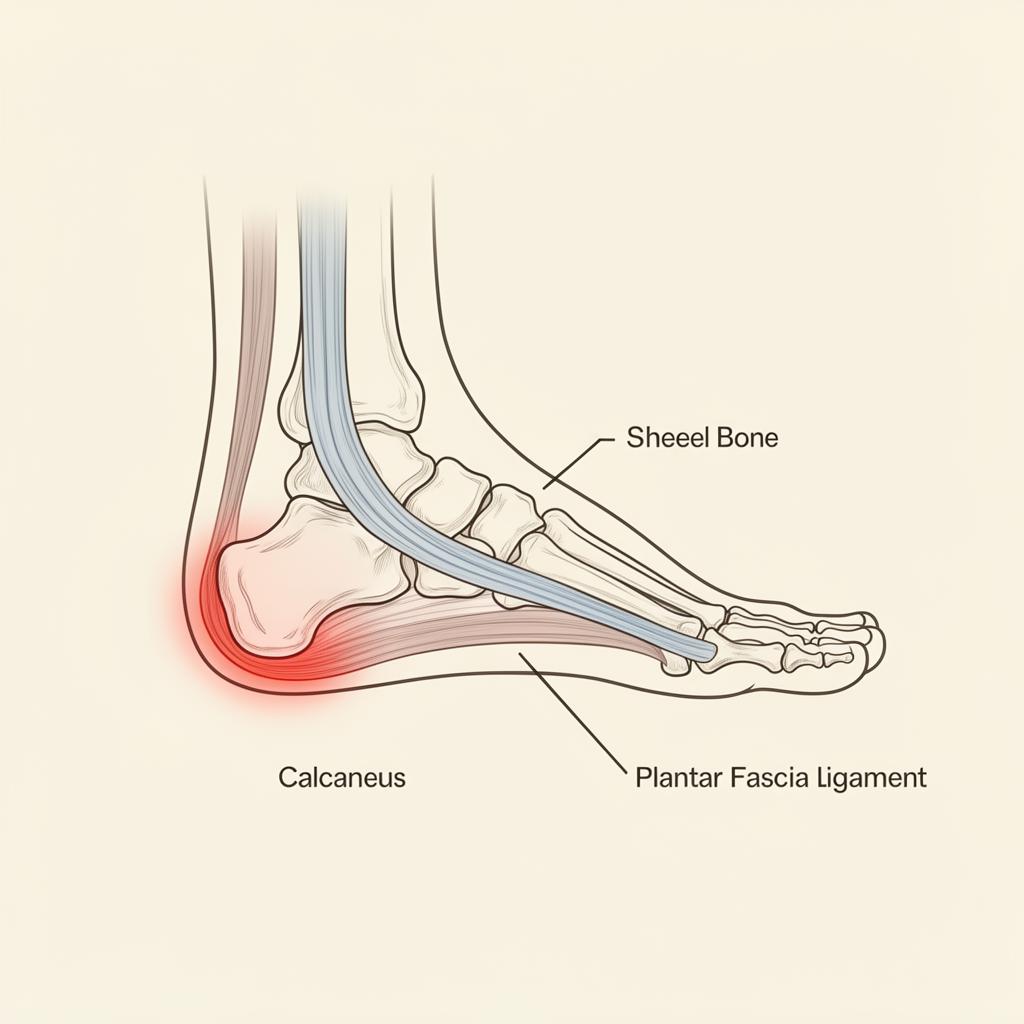
To understand the crisis, you first need to understand the anatomy. So, what is plantar fasciitis? It is inflammation and overload of the plantar fascia, the band of tissue along the sole of your foot.
Think of it as a thick elastic band running from your heel to your toes. The plantar fascia handles enormous mechanical loads every single day.
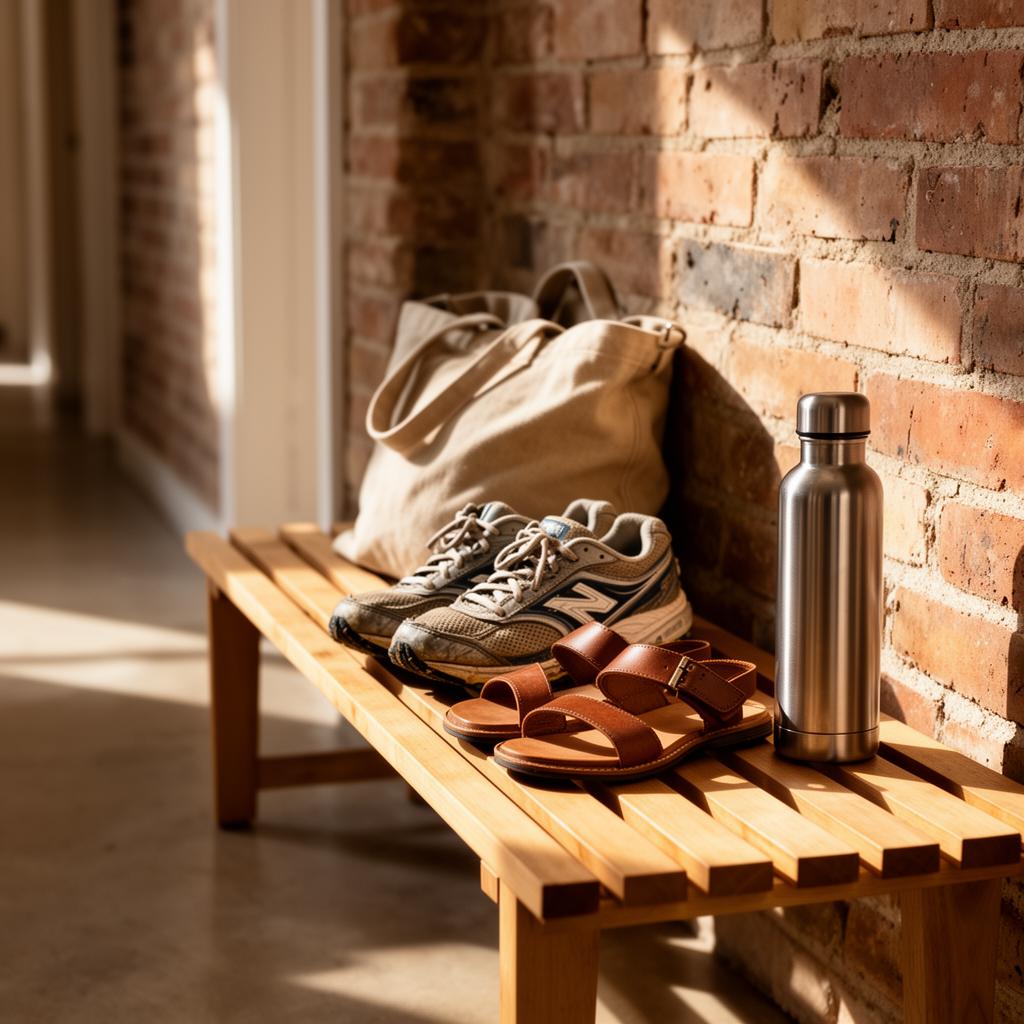
During summer, many of us walk barefoot on beaches and patios, or wear flat, unsupportive sandals. The tissue adapts to that pattern.
Then September arrives. Feet that have spread and softened over three months are pushed back into narrow toe boxes and stiff soles, and the sudden change in load is what triggers the 'Barefoot Summer' Transition Crisis. You can read our full breakdown of what plantar fasciitis is for the complete picture.
Plantar Fasciitis Causes: Why the Transition Hits So Hard
The 'Barefoot Summer' Transition Crisis is not random. It has clear, identifiable plantar fasciitis causes that cluster around a single moment in the calendar.
Here are the main drivers:
- Sudden footwear change. A flat, wide summer shoe replaced by a narrow, raised-heel work shoe alters how load passes through the foot.
- Calf tightness. Flip-flops change your gait, which can shorten the calf and increase strain on the heel.
- Activity spikes. Returning to a commute or a standing job adds hours on hard floors overnight.
- Weakened foot muscles. A barefoot summer is not always a strengthening summer, especially if it involved a lot of lying down.
One of the most common questions we hear is why does my heel hurt in the morning. The plantar fascia tightens while you sleep, so those first steps after rest pull on inflamed tissue.
This is also why plantar fasciitis gets worse in the morning and after any period of sitting. That sharp, plantar fasciitis pain when walking after rest is one of the most recognisable signs of all.
Plantar Fasciitis Symptoms and Treatment: How to Spot It Early
Catching the 'Barefoot Summer' Transition Crisis early makes plantar fasciitis recovery far smoother. Knowing the plantar fasciitis symptoms and treatment together helps you act before a niggle becomes a chronic problem.
Typical signs include:
- Sharp pain under the heel or in the arch.
- Worst pain with the first steps in the morning.
- Pain that eases with gentle movement but returns after rest.
- Tenderness when you press the inside of the heel.
If you are unsure whether your discomfort fits the pattern, our free self-assessment guide walks you through the checks. You can also explore the full list of plantar fasciitis symptoms to compare.
For tracking pain, use a simple 0 to 10 scale. Zero means no pain at all and 10 means the worst pain imaginable.
A bad day does not mean the condition is getting worse. It often reflects a change in activity level, footwear, or how much time you have spent on your feet.
Best for First Steps: Plantar Fasciitis Treatment During the Transition
When the crisis hits, the question everyone asks is how to cure plantar fasciitis quickly. The honest, evidence-based answer is that there is no instant fix, but consistent self-management works.
The best plantar fasciitis treatment UK approach for the early transition phase is built on three pillars. All three are needed, not just one or two.
- Load management. Reduce sudden spikes in standing and walking while your feet readapt.
- Stretching and exercise. The single most effective first-line treatment for the condition.
- Footwear support. Reintroduce structured shoes gradually rather than overnight.
For heel pain relief in the first days, rest, ice and short bouts of activity help calm the tissue. Our complete home treatment guide sets out each step in order.
People often search for foot pain under heel treatment as a separate problem, but it is usually the same condition. The same heel pain treatment UK principles apply whether you call it arch pain, heel pain, or plantar fasciitis.
If you want a structured, plain-English path through every option, from taping to NHS physiotherapy, our full treatment guide covers it all.
Best Exercises for Plantar Fasciitis and the Barefoot Summer Transition Crisis
Stretching and specific exercises are the most effective first-line treatment for plantar fasciitis, recommended by NHS physiotherapy departments and NIHR Evidence across the UK. They are the backbone of beating the 'Barefoot Summer' Transition Crisis.
The best exercises for plantar fasciitis combine flexibility and strength. Here are the core plantar fasciitis exercises to start with.
Calf and Achilles Stretches
Calf stretches for heel pain are essential because a tight calf pulls directly on the heel. Pair them with Achilles tendon stretches for heel pain done against a wall, holding for 30 seconds.
These plantar fasciitis stretches are most useful first thing in the morning, before you put weight through the foot.
The Towel Stretch
The towel stretch for plantar fasciitis is a classic NHS exercise. Sit with your leg straight, loop a towel around the ball of your foot, and gently pull the toes towards you.
Strengthening Work
Once pain settles, plantar fasciitis strengthening exercises build resilience. The most evidence-backed of these are eccentric calf raises for plantar fasciitis, lowering slowly over a step edge.
Foot strengthening exercises, such as toe scrunches and arch lifts, restore the stability that a barefoot summer may have softened. Mild discomfort of 3 to 4 out of 10 is acceptable during strengthening exercises.
Stop or reduce the exercise if pain exceeds 5 out of 10. These exercises to fix heel pain at home form the foundation of our 12-week progressive programme.
Massage and Self-Release
Simple plantar fascia massage techniques add useful heel pain relief between sessions. Rolling the arch over a frozen water bottle for a few minutes can calm inflamed tissue.
Best for Footwear: Shoes, Insoles and Heel Cups for the Transition
Footwear is where the 'Barefoot Summer' Transition Crisis is won or lost. The reintroduction of structured shoes should be gradual, not sudden.
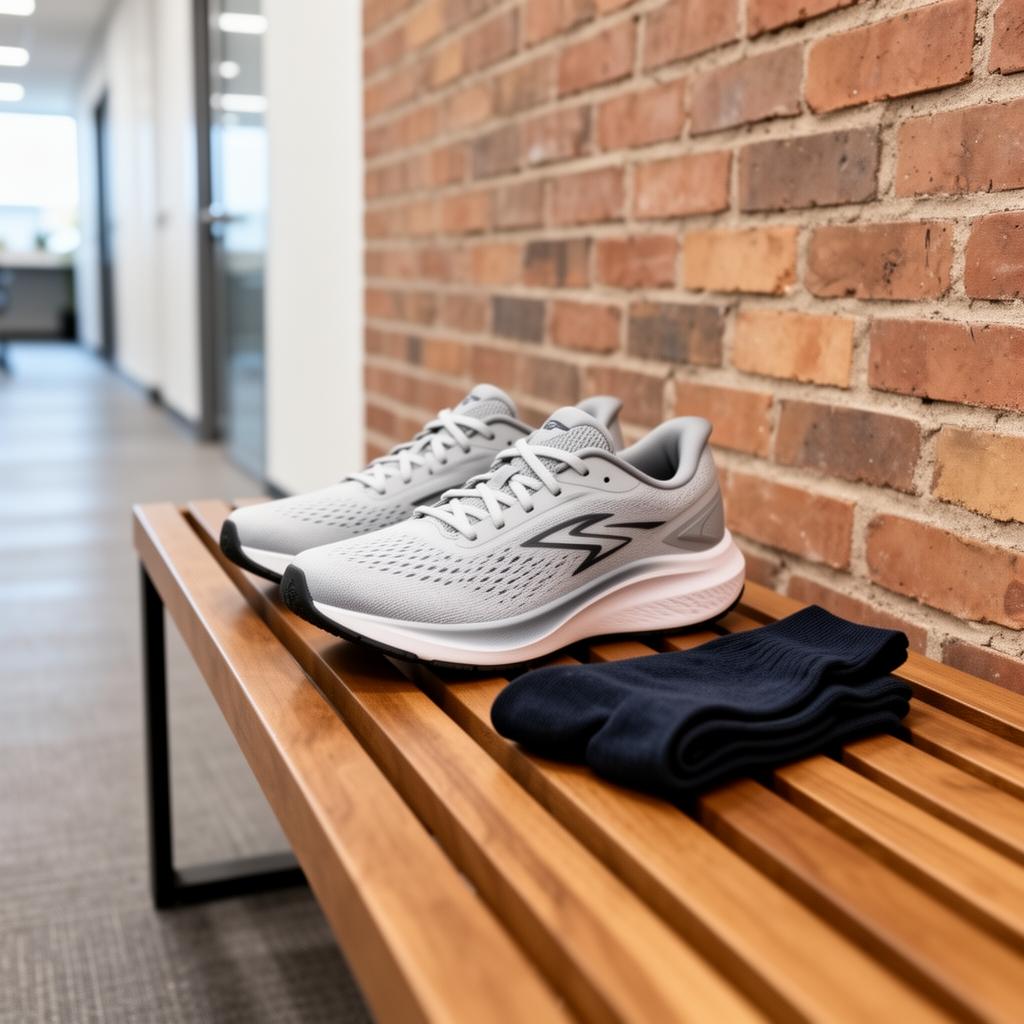
When choosing plantar fasciitis shoes UK shoppers can trust, look for heel cushioning, a firm heel counter, a slight heel drop, and a removable insole. Our UK footwear guide explains each feature.
For added support, the best insoles for plantar fasciitis distribute load across the arch rather than the heel alone. Our NHS-referenced insoles guide explains when over-the-counter options are enough.
Other supportive tools worth knowing about include:
- Heel cups for plantar fasciitis to cushion the calcaneum on hard floors.
- Orthotics for heel pain when over-the-counter insoles are not enough.
- Compression socks for plantar fasciitis to support tired feet during long standing shifts.
- A night splint for plantar fasciitis to keep the fascia gently stretched overnight, easing that first-step morning pain.
Taping can also bridge the gap while your feet readjust. Our step-by-step low-dye taping guide shows the NHS-backed technique with a free printable PDF.
Best for Active People: Runners and Standing Jobs
The crisis hits hardest for people who are on their feet, and two groups feel it most. Runners and shift workers both face a sharp jump in load after a gentler summer.
A common question is whether is walking good for plantar fasciitis. Gentle walking in supportive shoes usually helps, but a sudden return to long distances can flare symptoms.
Runners should follow a structured return rather than picking up where summer left off. Our 8-week return-to-running plan sets out safe progression.
For nurses, teachers, retail and hospitality staff, the challenge is that you cannot simply sit down. Our standing job recovery guide covers footwear and break strategies for the shop floor.
How Long Does Plantar Fasciitis Last? Recovery Timeline
Naturally, people want to know how long does plantar fasciitis last once the 'Barefoot Summer' Transition Crisis takes hold. The honest answer is that the recovery time for plantar fasciitis UK patients can expect is usually several months.
Most cases improve within 6 to 12 months when self-care is consistent. The recovery time for plantar fasciitis shortens when stretching, footwear and load management are combined from the start.
So can plantar fasciitis heal on its own? In many cases yes, because the condition often settles without major intervention if the right self-care steps are followed consistently.
People also ask how to get rid of plantar fasciitis fast. There is no miracle cure, but the fastest route is doing all three pillars together rather than hoping rest alone will fix it.
While we cannot promise a quick plantar fasciitis cure, the realistic goal is steady, measurable progress. The idea of an overnight plantar fasciitis cure is a myth, but consistent recovery is very achievable.
When to Seek Help: NHS, Physiotherapy and Foot Pain Specialists
Most people manage the 'Barefoot Summer' Transition Crisis at home, but some need professional input. If pain persists beyond a few weeks despite consistent self-care, it is time to ask for help.
Your first stop is usually your GP, who can refer you for physiotherapy for plantar fasciitis in the UK. Our guide to NHS treatment and wait times explains what to expect.
For stubborn cases, a heel pain clinic in the UK may offer shockwave therapy or steroid injections. A foot pain specialist in the UK, such as a podiatrist, can also assess whether custom orthotics for heel pain are appropriate.
Seeking physiotherapy for plantar fasciitis early can speed progress, and a foot pain specialist can rule out other causes of heel pain treatment UK patients sometimes confuse with the condition.
Every guide, exercise programme and downloadable resource on this site is based on published clinical guidance from NHS Trusts, the National Institute for Health and Care Research (NIHR Evidence), and NICE Clinical Knowledge Summaries (CKS). You can print and keep our free resources from the downloads library.
Have a question that is not answered here? You are welcome to contact us, or read more about who we are on our about page.
Conclusion
The 'Barefoot Summer' Transition Crisis is real, predictable, and, crucially, manageable. It happens because feet that loved a barefoot summer struggle to readapt to structured shoes, hard floors and longer days on your feet.
The fix is not a miracle cure. It is the consistent combination of stretching, strengthening and sensible footwear, all backed by NHS and NIHR Evidence.
Reintroduce your shoes gradually. Do your plantar fasciitis stretches every morning. Track your pain on the 0 to 10 scale, and remember a bad day is statistically normal.
Print our free programme, stick it on your fridge, and start your plantar fasciitis recovery today. If you do, the 'Barefoot Summer' Transition Crisis becomes just a few uncomfortable weeks rather than a long-term problem.
Frequently Asked Questions
What is the 'Barefoot Summer' Transition Crisis and is it serious in 2026?
The 'Barefoot Summer' Transition Crisis is the seasonal spike in heel pain when feet move from open summer footwear back into structured shoes too quickly. In 2026 it remains common, but it is rarely serious and usually responds well to consistent self-care and the right plantar fasciitis treatment.
Why does my heel hurt in the morning after a barefoot summer?
The plantar fascia tightens overnight, so your first steps stretch inflamed tissue, which is why your heel hurts in the morning. This is also why plantar fasciitis gets worse in the morning and after any period of rest, producing that familiar plantar fasciitis pain when walking after rest.
How do I cure plantar fasciitis fast during the transition?
There is no instant plantar fasciitis cure, but the fastest realistic route is combining load management, stretching and supportive footwear from day one. Doing all three pillars together is the most evidence-based way to get rid of plantar fasciitis as quickly as possible.
What are the best exercises for plantar fasciitis at home?
The best exercises for plantar fasciitis include calf stretches for heel pain, the towel stretch, and eccentric calf raises for plantar fasciitis. These plantar fasciitis exercises and foot strengthening exercises form the core of our free 12-week programme and can be done entirely at home.
How long does plantar fasciitis last and can it heal on its own?
Most cases improve within 6 to 12 months, and the recovery time for plantar fasciitis UK patients can expect shortens with consistent self-care. The condition often settles without major intervention, so yes, plantar fasciitis can heal on its own when the right steps are followed.
What shoes and insoles help with the Barefoot Summer Transition Crisis?
Look for plantar fasciitis shoes UK buyers can trust, with heel cushioning, a firm heel counter and a removable insole. Pairing them with the best insoles for plantar fasciitis, heel cups for plantar fasciitis, or orthotics for heel pain helps spread the load while your feet readapt.
When should I see a foot pain specialist in the UK?
See your GP or a heel pain clinic in the UK if pain persists beyond a few weeks despite consistent self-care. A foot pain specialist in the UK, or physiotherapy for plantar fasciitis, can offer further options such as custom orthotics, shockwave therapy, or a night splint for plantar fasciitis.